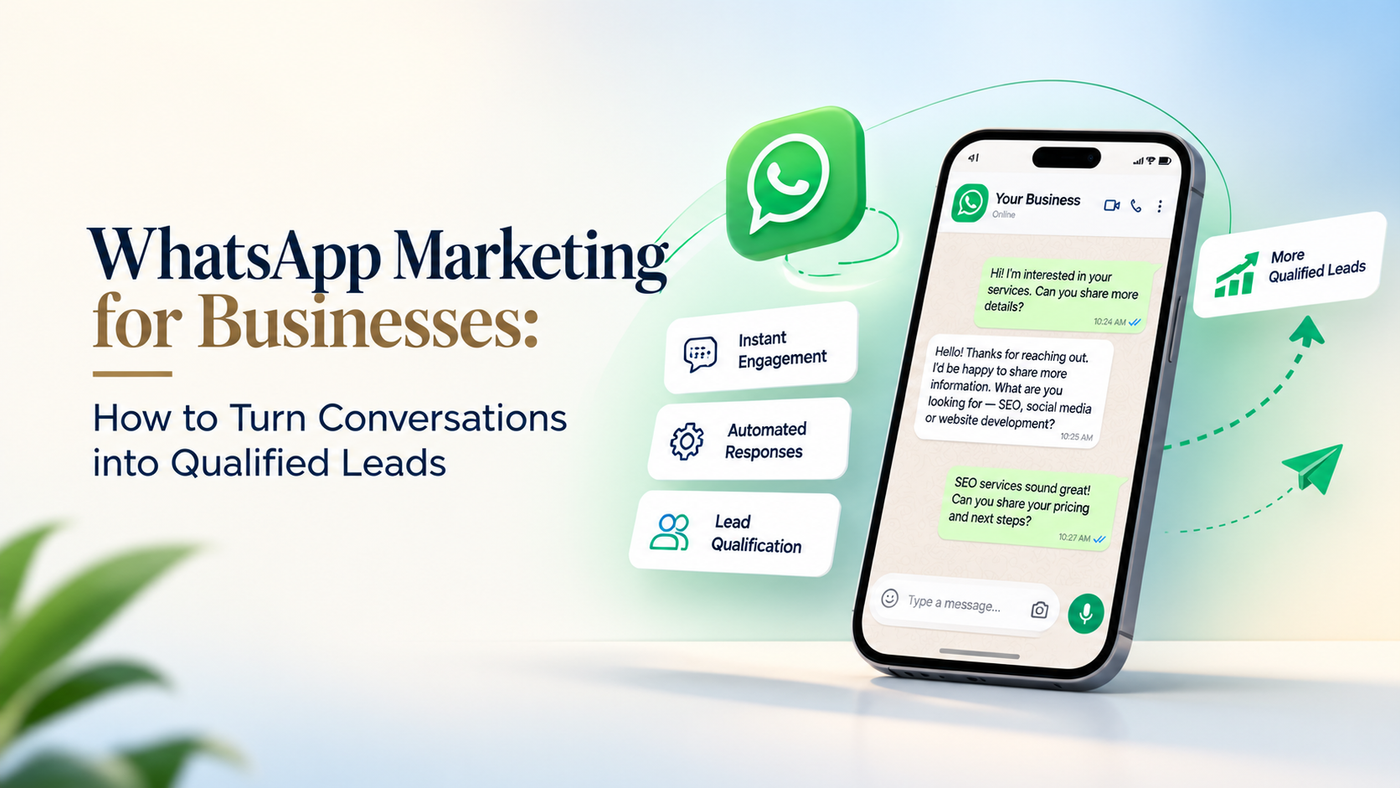
WhatsApp Marketing for Businesses: How to Turn Conversations into Qualified Leads
A customer discovers your business on Instagram, visits your website and opens WhatsApp to ask a question. That message creates an opportunity, but the quality of the conversation determines what happens next. An unclear response, an unanswered question or an irrelevant sales pitch can interrupt the buying journey.
WhatsApp marketing for businesses connects discovery with useful customer conversations. It gives prospects a way to understand your offer, share their requirements and decide whether to proceed. For service businesses, restaurants, hotels and lifestyle brands, these conversations can support enquiries, bookings and purchases.
The process needs more than a contact button. Your advertisement, opening message, qualification questions and follow-up should work together. When each step has a clear purpose, your team can assess enquiries more effectively and help suitable customers move forward.
What Is WhatsApp Marketing?
WhatsApp marketing is the use of WhatsApp as part of a business’s customer communication and promotional strategy. It can include responding to enquiries, sharing relevant service information, supporting bookings and sending promotional communication to people who have agreed to receive it.
There is an important distinction between responding to a customer’s request and sending ongoing marketing messages. Someone asking for a quotation should not automatically be treated as a subscriber to every future offer.
A useful strategy considers both the customer’s immediate requirement and their communication preferences. This helps your business maintain relevant conversations instead of treating every saved phone number as an advertising opportunity.
Start with a Specific Business Objective
Before directing more people to WhatsApp, identify what the conversation should achieve. A restaurant may want private-dining enquiries, while a hotel may want corporate-event requests. A creative agency may want consultations for website development or social media management.
Each objective requires different information. A private-dining enquiry may need a date, guest count and preferred time. A website project may require the business type, current website, required functionality and expected launch date.
Defining the objective makes it easier to prepare responses, assign responsibility and measure outcomes. It also prevents your team from treating unrelated messages as equally valuable leads.
Give Customers a Clear Reason to Message
A generic “Chat with us” button explains the action but offers little context. A more specific invitation helps customers understand why they should start a conversation.
For example, a restaurant could invite visitors to “Ask about private dining availability,” while an agency could use “Discuss your business website requirements.” These prompts connect the conversation with a recognisable need.
The same principle applies to advertisements. Explain the service, intended customer and next step before asking someone to message. If the campaign promotes a particular package, make its scope and important conditions clear.
Avoid encouraging messages through an offer your team cannot honour. The conversation should continue the promise made in the advertisement.
Connect the Opening Message with the Customer’s Interest
The first response should acknowledge why the customer contacted you. If someone asks about a website package, begin with that requirement rather than sending a long introduction to every service your agency provides.
A useful opening might read: “Thank you for contacting Double Trouble Studio about your website. Please share your business name, the type of website you need and your preferred launch timeline so we can guide you.”
This response confirms the context and explains what information will help. It gives the prospect a manageable next step without demanding a complete project brief immediately.
Where you use a prepared opening message, review it regularly. Outdated offers or incorrect service details can create confusion before a team member joins the conversation.
Qualify Enquiries Without Making the Conversation Difficult
Lead qualification helps determine whether your business can meet the prospect’s requirements. It should feel like a useful discussion, with questions that clearly relate to the service.
For a website enquiry, begin with the business type and required outcome. Then clarify whether the prospect needs a new website, a redesign or ongoing management. Budget and timeline can follow once the scope is better understood.
For a hotel or event enquiry, the date, location and number of attendees may need to come first because they affect availability. The order should reflect the customer’s decision and your operational requirements.
Avoid repeating questions the customer has already answered. Read the conversation before responding and collect information progressively.
Share Information That Helps the Customer Decide
Once you understand the requirement, send relevant information. This might include a service summary, suitable project examples, availability details or the steps needed to prepare a quotation.
Keep messages readable on a phone. A short explanation followed by one relevant document or link is often easier to assess than several unrelated attachments.
If you share a brochure, clarify which section applies to the customer. If you share pricing, explain what is included and what could change with the final scope. If your team needs more information before quoting, explain why.
The purpose is to help the prospect understand the offer and its suitability. Sending more material does not necessarily make the conversation more useful.
Use Automation for Routine Tasks
Automation can support acknowledgement messages, basic information collection and enquiry routing. These tasks are useful when they reduce repetitive work and set clear expectations.
For example, an automated acknowledgement can confirm that the message was received and state your response hours. It should not suggest that a person has reviewed the requirement when that has not happened.
Provide a clear route to a team member for questions involving customised pricing, complaints, unusual requests or unclear requirements. Customers should not have to repeat the same information through several automated steps.
Before introducing an automated workflow, test it with realistic enquiries. Check whether the responses are accurate, whether the conversation can recover from an unexpected answer and whether the handover reaches the right person.
Assign Responsibility for Every Enquiry
An enquiry process becomes unreliable when everyone assumes someone else will respond. Decide who handles incoming messages and how conversations move between team members.
Keep a simple record of the enquiry, responsible person and next action. Depending on your business, the status could include new enquiry, awaiting details, consultation scheduled, quotation sent or closed.
When handing over a conversation, include a short summary of the customer’s requirement. This reduces repetition and helps the next person respond with context.
Clear ownership also supports follow-up. Your team can distinguish between a prospect waiting for your answer and a prospect who has not responded to a proposal.
Follow Up with Relevant Information
A follow-up should give the customer a useful reason to continue the conversation. It might clarify an unanswered question, confirm availability or ask whether the proposed scope meets their needs.
After sending a website proposal, for example, you could ask whether the prospect needs clarification on the page structure, maintenance scope or project timeline. This is more helpful than repeatedly sending “Any update?”
Agree on the next step where possible. If the customer says they will review the proposal next week, record that timing and follow up accordingly.
Respect requests to stop promotional communication. Repeated messages after a clear refusal can damage the customer experience and your brand’s credibility.
Measure Qualified Leads and Business Outcomes
Message volume shows how much activity the channel generates. It does not explain how many people have a relevant need or become customers.
Review how many enquiries meet your qualification criteria, progress to a consultation, receive a quotation and convert into business. Where possible, record whether the conversation began through an advertisement, website, social profile or referral.
Use consistent definitions. A contact-button click, a conversation started and a qualified enquiry represent different stages. Combining them into one number makes performance harder to interpret.
Sales feedback matters too. If many enquiries concern a service you do not offer, revise the source message. If suitable prospects repeatedly ask the same question, add the answer earlier in the journey.
Common WhatsApp Marketing Mistakes
One common mistake is sharing promotional messages without establishing the recipient’s interest or permission. Another is using the same response for every enquiry, even when the requirements differ.
Businesses also lose opportunities by providing incomplete information. A price without scope, a brochure without guidance or an availability answer without a next step can leave the customer unsure how to proceed.
Finally, avoid relying on WhatsApp as the only record of your sales process. Maintain an organised enquiry system so that responsibilities, proposals and follow-ups remain visible to the relevant team.
Frequently Asked Questions
Can WhatsApp marketing help a service business?
Yes. It can support requirement discussions, consultations and follow-up. Its usefulness depends on whether your customers prefer the channel and whether your team manages conversations consistently.
Should every enquiry be moved to WhatsApp?
No. Some customers prefer email, telephone calls or website forms. Offer a suitable communication choice and use the channel that fits the conversation.
What should the first business response include?
Acknowledge the customer’s request, confirm the relevant service and ask for the information needed to guide them. Keep the first step manageable.
Can I send offers to everyone who has contacted my business?
Do not assume that an enquiry means agreement to receive ongoing promotions. Obtain appropriate permission and respect the customer’s communication preferences.
How do I qualify a WhatsApp lead?
Ask relevant questions about the requirement, location, timeline and other service-specific criteria. Use the answers to assess fit and decide the next step.
Should I automate every response?
Routine acknowledgements and information collection may be suitable for automation. Complex requirements and sensitive issues need a clear route to a person.
How frequently should I follow up?
Base follow-up on the customer’s timeline and the stage of the discussion. Send messages when you have a useful clarification or agreed next step rather than following a rigid daily schedule.
Does a WhatsApp enquiry count as a sale?
No. A conversation may indicate interest, but qualification, quotation and purchase are separate stages. Record them separately when reviewing results.
Conclusion: Make Every Conversation Easier to Continue
A useful WhatsApp marketing strategy gives customers a clear path from initial interest to an informed decision. Relevant opening messages, practical qualification and organised follow-up help your team respond effectively and identify suitable opportunities.
📩 sharprays.com 📞 +91 94159 51060 📍 Mumbai, Maharastra.